
Todd and I have repeatedly emphasized that no matter how careful you are, you or someone you love may still fall victim to cybercrime. The key is knowing how to respond—starting with reporting it to law enforcement.
A recent case in Kentucky illustrates this. A man allegedly collected photos of women and minors from social media and other sources and uploaded them—unaltered and seemingly innocent—to a pornographic website. This site allowed users to leave disturbing comments about the people in the images. According to his profile, the man had uploaded over 10,000 images.
I won’t name the site, but its name implies incest content. I didn’t visit it, but open sources describe it as hosting a range of illegal material, including child pornography and bestiality. It has also been referenced in at least one federal child pornography case.
The situation unraveled when someone discovered the man had posted images of his own wife. That person confronted him on Facebook, where he reportedly admitted to it. The discovery was then shared publicly, sparking outrage in his community, including his local church. Some people began visiting the site to check for photos of themselves or loved ones (a dangerous move), while others shared the man’s address online (also ill-advised). Fortunately, someone eventually contacted law enforcement. Here is their response:
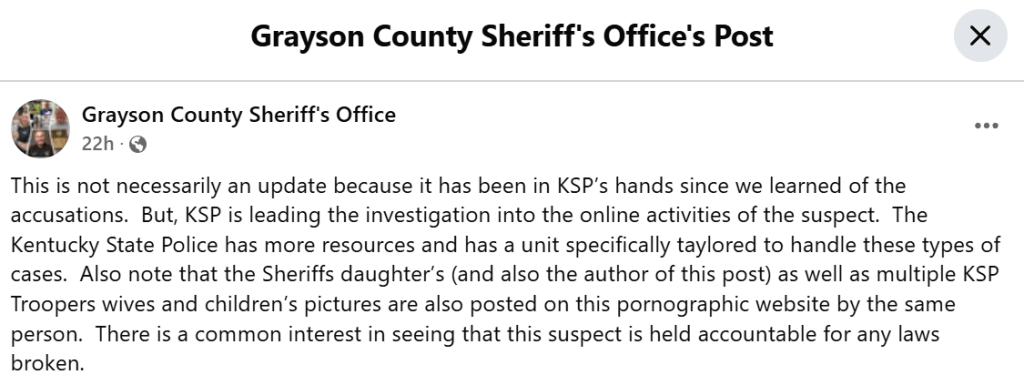
Potential victims were referred to the local attorney’s office at 270-259-9306.
This case shows how you can become a victim through no fault of your own. Posting non-sexual images to a website isn’t always illegal—but if it leads to harassment or threats, it can be. There’s no public evidence that happened here, but similar cases have involved AI-generated child pornography from innocent images. Investigators will likely explore whether the suspect possessed, uploaded, or created illegal content such as child pornography or bestiality, which could lead to federal charges and harsher penalties.
If something like this happens to you or a loved one, here’s what to do:
- Report it to law enforcement immediately.
- Don’t contact the person or try to investigate—it could tip them off or result in destroyed evidence.
- Don’t visit the site. Accessing a site hosting illegal content could unintentionally expose you to criminal liability just by viewing images.
- Don’t dox or publicly accuse the suspect. You could be wrong, and it might lead to someone getting hurt. Leave it to law enforcement.
- If you suspect your images were used, inform investigators. Mention any connection you had to the suspect. If identified as a victim, you may have rights, including restitution and the chance to speak at sentencing.
- Consult a private attorney. They may help you get images removed and pursue civil action. Be aware: once an image is online, it can be reverse searched to identify you from social media or other sources.
- Always lock down your social media privacy settings and think carefully about what you share.
Todd and I cover all of this in our book, Surviving a Cyberattack: Securing Social Media and Protecting Your Home but as this case shows, even strong precautions may not fully protect you. What matters is knowing how to respond.
 The Cyber Safety Guys
Leave a comment